Technique
Cold Stratification: The Four-Week Step That Fixes Stubborn Seed
Some seeds will not germinate properly until they think a winter has passed. Here is how to give them one in a refrigerator — and which seeds actually need it.
By The Homestead Shelf · Updated 25 August 2026
What cold stratification actually does
A seed is not simply waiting for warmth. Many temperate perennials carry a chemical brake — a dormancy mechanism that stops them sprouting the moment they hit the ground in autumn, which would be fatal a few weeks later when frost arrives.
That brake is released by a sustained period of cold and damp. In nature, the seed lies under leaf litter through winter, the cold gradually breaks down germination inhibitors, and by spring the seed is primed to sprout as soon as the soil warms.
Cold stratification is simply that winter, performed on purpose, in a refrigerator, at a time of your choosing. It is not a trick or a growth hormone. You are supplying a condition the seed already expects.
The refrigerator method, step by step
The whole method takes about ten minutes of work and four weeks of waiting. Nothing here needs special equipment.
- Dampen a handful of clean sand, vermiculite or a folded paper towel until it is barely moist. Squeeze it hard and no water should run out. This is the step people get wrong — wet medium rots seed, and rotted seed cannot be rescued.
- Mix the seed through the medium, or fold it into the towel, so every seed is in contact with moisture but not sitting in water.
- Seal it in a zip bag or small lidded container. Label it with the species and the date you started — four weeks is longer than you will remember accurately.
- Put it in the main body of the refrigerator, not the freezer door and not the freezer. You are aiming for roughly 1–5°C (34–40°F).
- Check it once a week. Look for mould, and for seeds that have started to sprout early. Discard anything furry; plant anything sprouting immediately.
- At the end of the period, sow as you normally would for that species. Handle any seed with a visible root tip gently — that root is the plant.
If you would rather see the difference than take it on trust, this side-by-side test on coneflower seed is the clearest demonstration we have found:
How long each seed needs
Duration is species-specific. Applying one number to everything is the second most common mistake. Of the ten herbs in a typical medicinal seed collection, three genuinely benefit:
| Seed | Cold period | Difficulty | Guide |
|---|---|---|---|
| Evening Primrose Oenothera biennis | Optional — improves consistency | Moderate | — |
| Marshmallow Althaea officinalis | Recommended — 3–4 weeks cold, moist | Hard | — |
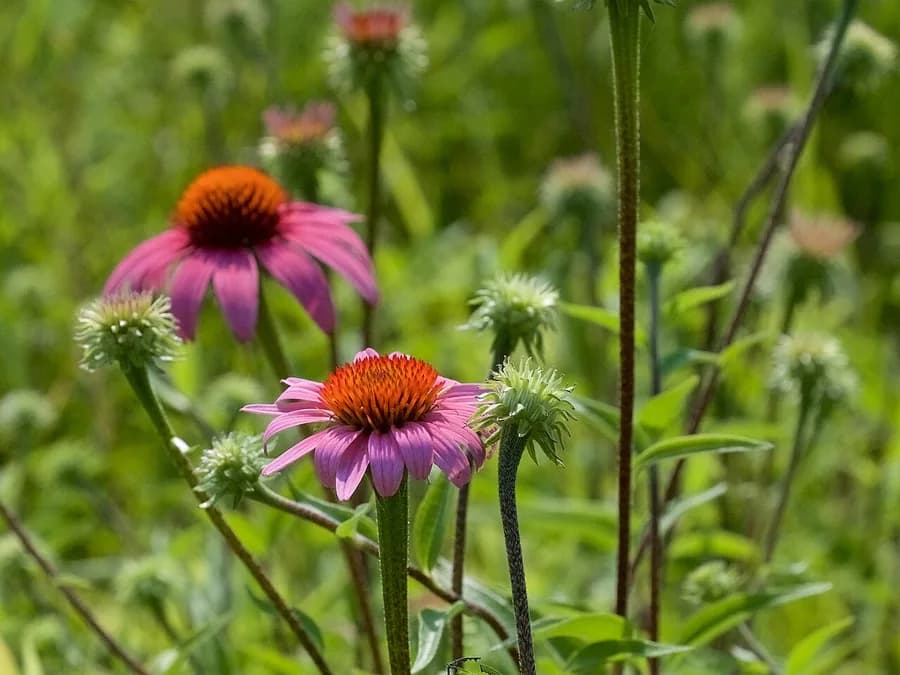
| Echinacea Echinacea purpurea | Strongly recommended — 4 weeks cold, moist | Hard | Read |
| Lavender Lavandula angustifolia | Required in practice — 3–6 weeks cold, moist | Hard | Read |
Which seeds do not need it at all
Stratifying seed that does not need it rarely does harm, but it costs you a month for nothing. These germinate readily without any cold treatment:
- Calendula — 7–14 days
- Chicory — 7–14 days
- German Chamomile — 7–14 days, surface sow (needs light)
- Feverfew — 10–14 days, surface sow (needs light)
- Yarrow — 10–14 days, surface sow (needs light)
- California Poppy — 14–21 days
As a rough rule: annuals and Mediterranean species generally do not need a cold period, while temperate perennials from continental climates often do.
When it goes wrong
Mould in the bag
The medium was too wet, or the bag was never opened. Discard furry or softened seed, air the rest briefly, and reseal with drier medium. Weekly checks exist precisely to catch this before it spreads.
Seeds sprouting inside the refrigerator
This is success arriving early, not a problem. Plant those seeds immediately and handle them gently — the white tip is the root, and breaking it kills the seedling.
Nothing germinates even after stratification
Check three things before blaming the seed: whether the species needs light and was buried, whether the soil was warm enough after sowing, and whether the seed was old. Viability declines with age, and some species are short-lived in storage.
The easier alternative: autumn sowing
There is a method that requires no refrigerator, no bags and no weekly checks: sow directly outdoors in late autumn and let the actual winter do the work. This is how these plants evolved to reproduce, and results are frequently better than the indoor method.
The trade-off is control. Outdoor-sown seed germinates where you put it, on its own schedule, and some will be lost to weather and wildlife. If you want a known number of seedlings at a known time, the refrigerator gives you that. If you want the least work, autumn sowing wins.